
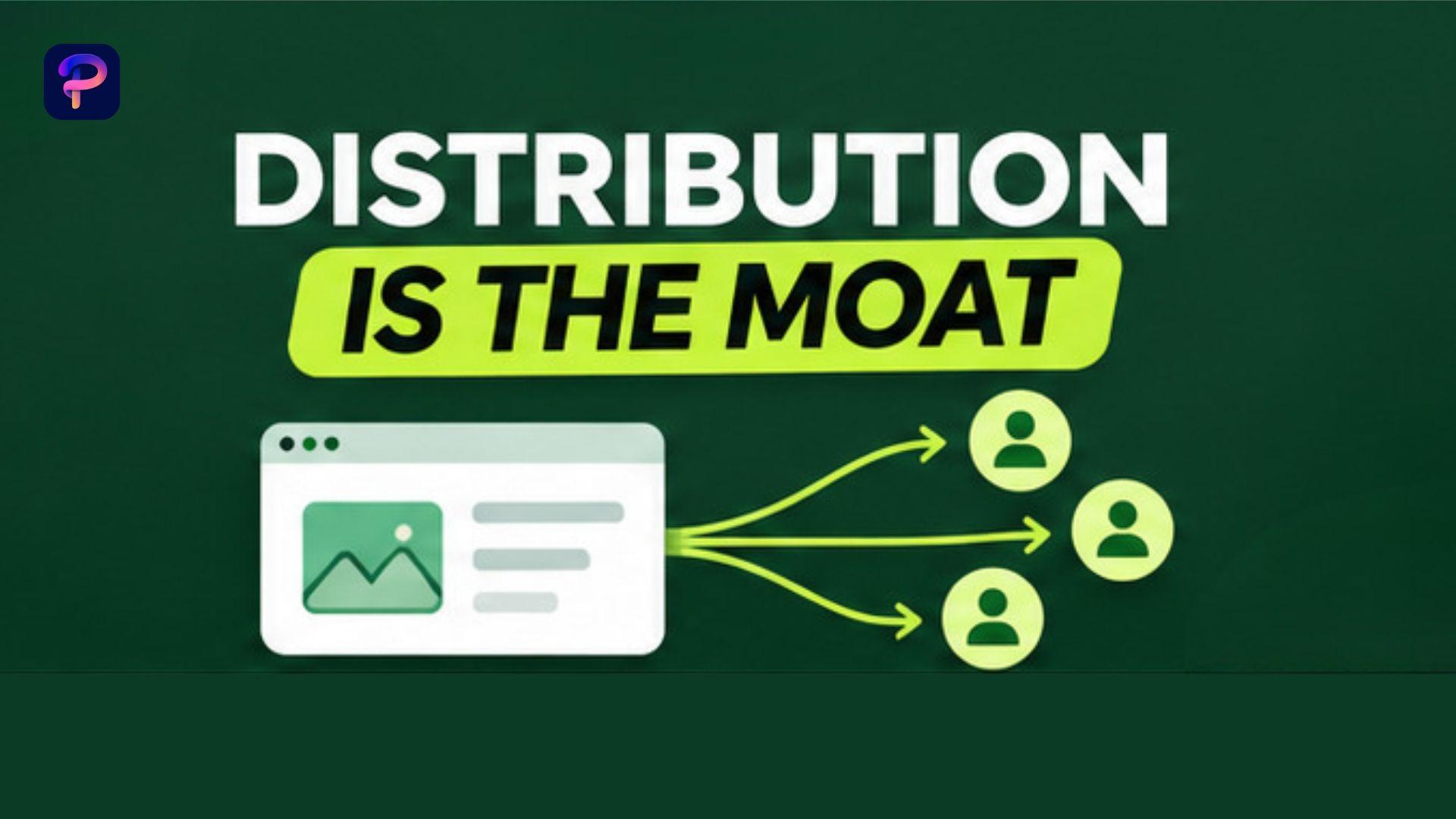
AI made building faster. It did not make customers appear.
In 2026, a solo founder can use AI coding tools to turn an idea into a working app faster than before. But after launch comes the harder question: Who will discover it, trust it, and pay for it?
Why coding alone is no longer enough
When more founders can build similar products, shipping features is less distinctive. Reliable distribution—reaching the right people repeatedly—becomes a major advantage. Product quality still matters: marketing cannot rescue a product nobody needs.
What is a distribution moat?
A distribution moat is an advantage in reaching and retaining customers that competitors cannot easily copy. It can come from an engaged audience, trusted community, organic search visibility, partnerships, referrals, or deep customer relationships.
A social account with thousands of passive followers is not necessarily a moat. An audience that consistently trusts your recommendations may be.
How solo founders can build distribution
- 1
Choose a narrow customer
Pick one audience and one urgent problem instead of marketing to everyone.
- 2
Choose one acquisition channel
Start with SEO, a relevant community, LinkedIn, or partnerships—where your customers actually spend time.
- 3
Publish genuinely useful content
Answer customer questions, share examples, and demonstrate the product. Avoid generic AI-generated spam.
- 4
Create a repeatable workflow
Use ChatGPT or Claude to draft ideas and content, then use Pulgrid for supported planning, scheduling, and publishing workflows.
- 5
Measure customers, not just views
Track qualified visits, signups, activation, and paid conversions. Improve based on evidence.
Vibe coding needs vibe marketing
Vibe coding can help you create the product. Vibe marketing applies AI-assisted workflows to the work of getting it noticed. Choose either ChatGPT or Claude for research and drafts; use Pulgrid to coordinate the marketing activities its connected channels support. Review claims and content before publishing.
Your first 30 days
Week 1: Interview potential users and clarify your promise. Week 2: Publish helpful answers to their top questions. Week 3: Test one distribution channel and one clear call to action. Week 4: Review signups and conversions; double down on what works.
The winning strategy is not to post everywhere. It is to become consistently valuable somewhere.
The bottom line
Coding is still valuable. But as building gets more accessible, distribution, trust, and customer understanding become harder to replicate. Build the product—and build the path that brings customers to it.